Showing posts with label renewable energy. Show all posts

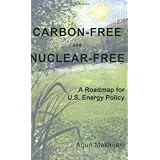
Carbon-Free and Nuclear-Free: A Roadmap for U.S. Energy Policy Review

Carbon-Free and Nuclear-Free: A Roadmap for U.S. Energy Policy
Average Reviews:

(More customer reviews)
Are you looking to buy Carbon-Free and Nuclear-Free: A Roadmap for U.S. Energy Policy? Here is the right place to find the great deals. we can offer discounts of up to 90% on Carbon-Free and Nuclear-Free: A Roadmap for U.S. Energy Policy. Check out the link below:

>> Click Here to See Compare Prices and Get the Best Offers

Carbon-Free and Nuclear-Free: A Roadmap for U.S. Energy Policy ReviewThe Author seems to have a an impeccable background to write this book. The Foreword mentions the large cost savings plan he recommended for the TVA which in later years was actualized. This a well written book for the layman, a good overview of the technologies that are competitive now, and a timetable/roadmap that in the author' opinion could lead to a carbon free/ nuclear free future.
The good news presented by this book is that the change-over to a carbon free future is a not a hopeless situation. The author greatly details where wind power and solar power are advantageous, along with specifing the geographical regions and their respective contributions to base and peak power. The book is very specific on what technologies can produce electricity or hydrogen competitively or whether the technology has to wait on technical breakthroughs or higher volume demand.
Carbon-Free and Nuclear-Free: A Roadmap for U.S. Energy Policy Overview

Want to learn more information about Carbon-Free and Nuclear-Free: A Roadmap for U.S. Energy Policy?

>> Click Here to See All Customer Reviews & Ratings Now
Read More...

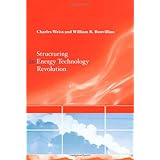
Structuring an Energy Technology Revolution Review

Structuring an Energy Technology Revolution
Average Reviews:

(More customer reviews)
Are you looking to buy Structuring an Energy Technology Revolution? Here is the right place to find the great deals. we can offer discounts of up to 90% on Structuring an Energy Technology Revolution. Check out the link below:

>> Click Here to See Compare Prices and Get the Best Offers

Structuring an Energy Technology Revolution ReviewA lot of people are hoping that we can innovate our way into an energy and environmentally-secure future. The question is: How on earth are we going to do this? Experts on science, government and innovation policy, Charles Weiss and William Bonvillian explore the role of government in bringing on this energy innovation in their new book, Structuring An Energy Technology Revolution. (In the interest of full disclosure, I should say that I am acquainted with the second author. On the other hand, maybe I should also say that like thousands of other Americans I can't help but cheer when I see the value of my Exxon stock go up.)
I found Structuring An Energy Technology Revolution to be a great book. Weiss and Bonvillian, lay out a very plausible and detailed roadmap towards the goal of energy independence and environmental health. In their vision, government, industry and universities collaborate to foster new energy technologies. Think DARPA and the IT revolution on B vitamins, if not steroids. One of their most intriguing ideas (out of many) is that of technology neutrality. Here "no single technology has any special claim on support." (Structuring An Energy Technology Revolution, p.14). Instead, if I understand them correctly, technologies at different stages of development receive research or implementation support depending on their technoeconomic merit. The idea is to nurture an energy innovation environment that speeds up the creation and marketing of new energy technologies. Including the downstream costs or "externalities" of all energy products in the equation is a notable way of leveling the playing field.
Establishing an effective innovation system for energy technology is no easy task. It has to supply sufficient alternatives to the old-style use of fossil fuels, be hospitable to private investment, and not be a boondoggle for bureaucrats or vested interests. This will take considerable political will. It is clear that this political discipline has to come from an informed public. To give us the information we need is the mission of this far-seeing work. Structuring An Energy Technology Revolution shows us how our already intertwined government, science and business communities could actually begin to solve these problems. Will they? Will we step up? I highly recommend this book. Beautifully written, the authors' broad grasp and effective presentation of these complexities gives us an almost panoramic view of the subject with the insider's command of details. If you're at all serious about following or shaping our economic, energy and environmental future, this book is necessary reading.
Structuring an Energy Technology Revolution Overview

Want to learn more information about Structuring an Energy Technology Revolution?

>> Click Here to See All Customer Reviews & Ratings Now
Read More...

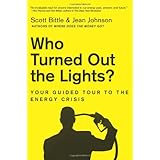
Who Turned Out the Lights?: Your Guided Tour to the Energy Crisis Review

Who Turned Out the Lights: Your Guided Tour to the Energy Crisis
Average Reviews:

(More customer reviews)
Are you looking to buy Who Turned Out the Lights: Your Guided Tour to the Energy Crisis? Here is the right place to find the great deals. we can offer discounts of up to 90% on Who Turned Out the Lights: Your Guided Tour to the Energy Crisis. Check out the link below:

>> Click Here to See Compare Prices and Get the Best Offers

Who Turned Out the Lights: Your Guided Tour to the Energy Crisis ReviewThis is a basic introduction to the energy crisis, written in an accessible and humorous style. I was initially concerned that the pop-culture references would be a bit too much (both Homer Simpson and Paris Hilton make appearances on the first page), but in the end I actually enjoyed some of them.
The goal of the book is to present possible solutions to America's energy problems in an unbiased way. The pros and cons of each solution (more nuclear power, increased oil drilling, a tax on carbon emissions, etc.) are explained, and the authors try to avoid making judgements about what's best, leaving it for the reader to make up her own mind.
I do think that they succeed in explaining the issues clearly, though ultimately, I can't really say that I learned very much from this book. I suspect that, like me, many of the people who would be inclined to read something like this are already reasonably well-informed.
Still, I think this is a good introduction to the topic. Perhaps the highest indication of its success is the fact that I'm considering reading the authors' previous book, Where Does the Money Go?, about the federal budget crisis. As a Canadian who just recently moved to the United States, that's something that I really know nothing about--making me fit perfectly into the target audience.
So, in brief, Who Turned Out the Lights? is a good introductory book, very accessible and easy to read, but not necessarily for those who are already familiar with the topic.Who Turned Out the Lights: Your Guided Tour to the Energy Crisis Overview

Want to learn more information about Who Turned Out the Lights: Your Guided Tour to the Energy Crisis?

>> Click Here to See All Customer Reviews & Ratings Now
Read More...

Energy, Sustainability and the Environment: Technology, Incentives, Behavior Review

Energy, Sustainability and the Environment: Technology, Incentives, Behavior
Average Reviews:

(More customer reviews)
Are you looking to buy Energy, Sustainability and the Environment: Technology, Incentives, Behavior? Here is the right place to find the great deals. we can offer discounts of up to 90% on Energy, Sustainability and the Environment: Technology, Incentives, Behavior. Check out the link below:

>> Click Here to See Compare Prices and Get the Best Offers

Energy, Sustainability and the Environment: Technology, Incentives, Behavior ReviewThis book covers a highly topical and timely issue, how to meet our energy needs without damaging the environment in the long term. It covers many of the relavant aspects of the debate with input from a number of global scholars covering various topics. A must read for anyone interested in sustaibility, climate change and energy security/policy debateEnergy, Sustainability and the Environment: Technology, Incentives, Behavior Overview

Want to learn more information about Energy, Sustainability and the Environment: Technology, Incentives, Behavior?

>> Click Here to See All Customer Reviews & Ratings Now
Read More...

Biogas from Waste and Renewable Resources: An Introduction Review

Biogas from Waste and Renewable Resources: An Introduction
Average Reviews:

(More customer reviews)
Are you looking to buy Biogas from Waste and Renewable Resources: An Introduction? Here is the right place to find the great deals. we can offer discounts of up to 90% on Biogas from Waste and Renewable Resources: An Introduction. Check out the link below:

>> Click Here to See Compare Prices and Get the Best Offers

Biogas from Waste and Renewable Resources: An Introduction ReviewThis book needs to be translated better and it needs an English editor. Otherwise, its O.K. Not great but O.K. I have yet to decide if it was a waste of money, however I'm leaning to the waste of money side. Sorry.Biogas from Waste and Renewable Resources: An Introduction Overview

Want to learn more information about Biogas from Waste and Renewable Resources: An Introduction?

>> Click Here to See All Customer Reviews & Ratings Now
Read More...

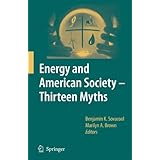
Energy and American Society - Thirteen Myths Review

Energy and American Society - Thirteen Myths
Average Reviews:

(More customer reviews)
Are you looking to buy Energy and American Society - Thirteen Myths? Here is the right place to find the great deals. we can offer discounts of up to 90% on Energy and American Society - Thirteen Myths. Check out the link below:

>> Click Here to See Compare Prices and Get the Best Offers

Energy and American Society - Thirteen Myths ReviewThis is an excellent introduction to real energy issues, written by experts, with many useful references for further study. Energy mythinformation (inadvertent or otherwise) propagates all too easily, and this book does a good job of debunking the common myths.
Anyone involved in policies regarding energy&climate change should be familiar with this material, and that includes ordinary citizens, especially those who might care about the US economy and environment seen by any grandchildren.
I'd summarize the book as saying:
a) We face serious problems, as we *will* run out cheap oil, and then cheap gas [look up "Peak Oil" in Wikipedia], and if we keep burning coal without sequestering CO2, we will push the planet into a much hotter state with serious economic downsides. Right now, the US economy depends on cheap oil, and of course, it might be better not to be selling off big chunks of the US economy to other countries to feed our oil habit forever.
b) However, we actually have pretty good solutions for many of the problems, mostly without requiring magic technology leaps. There is no one silver bullet, but a myriad of small actions to be taken to stop wasting energy, many of which actually save money right away.
c) Most of the actions required are actually policy choices, with help from widespread use of existing technologies, plus rational R&D investments. Low electicity-per-capita use in some states has been achieved with no obvious economic catastrophes. [Connecticut, Massachusetts, New York, Rhode Island, and California are not usually considered poor places.] Of course, we have much further to go, but in many cases, it really is a matter of choosing to do the right things.
The editors provide an introduction and summary bookending 13 myth discussions by (mostly) other authors. Following is a list of the 13 myths, with comments on a few of the chapters:
1. Today's Energy Crisis is "Hype"
2. The Public is Well Informed About Energy
3. High Land Requirements and an Unfavorable Energy Balance Preclude Biomass Ethanol from Playing a Large Role in Providing Energy Services
- This is an especially important chapter, as the topic engenders much confusion. Not all biofuels need be from corn, and there is more land available than many think.
4. The Hydrogen Economy is A Panacea
- Dr. Joseph Romm shows why hydrogen (especially for vehicles) is a long way off, if ever, compared to PHEV/FF (plug-in-electric-vehicles with flex-fuels). He shows why research is appropriate, but not spending huge $$ for premature deployment, especially to the detriment of truly useful steps doable much sooner.
I also his recommend Joe's website http://climateprogress.org/, and his book Hell and High Water: Global Warming--the Solution and the Politics--and What We Should Do.
5. Price Signals are Insufficient to Induce Efficient Energy Investments
6. The Barriers to New and Innovative Energy Technologies are Primarily Technical:
- The Case for Distributed Generation
- In many ways, distributed generation of electricity would be more efficient, but power companies are geared for centralized generation, even with expensive long-distance distribution.
7. Renewable Energy Systems Could Never meet Growing Electricity Demand in America
8. Worldwide Power Systems are Economically and Environmentally Optimal
- Tom Casten and Robert Ayres show how far off we are, illustrating the efficiencies gotten with waste-energy recycling / cogeneration ... that are strongly inhibited by regulatory issues and market distortions, compared with places like Denmark or The Netherlands, etc. See Casten's website: http://www.recycled-energy.com/index.html
9. Energy Efficiency Improvements have Already Reached Their Potential
- Amory Lovins shows why not, why "negawatts" are really cost-effective, and why nuclear plants don't seem very cost-effective compared to other options. I especially liked his description of his Rocky Mountain house that lacks a conventional heating system, but whose design cuts heat losses to within 1% of various free heat gains. "The last 1% can come from a 50-watt dog, adjustable to 100W by throwing a ball..."
10. Energy Efficiency Measures are Unreliable, Unpredictable, and Unenforceable
11. Energy R&D Investment Takes Decades to Reach the Market
12. Climate Policy will Bankrupt the US Economy
- California is pretty aggressive on this, because we have to be, as all the impacts of global warming will cost us money. Nevertheless, California is hardly poor, and we expect that reworking our infrastructure for energy efficiency, and heading towards minimal use of fossil fuels as early as we can, will only make us more competitive in the face of increasing oil costs.
13. Developing Countries are Not Doing Their Part in Responding to Concerns about Climate Change
=====
This is a very useful book. I expect to study many chapters in further depth and chase down references.
Energy and American Society - Thirteen Myths Overview

Want to learn more information about Energy and American Society - Thirteen Myths?

>> Click Here to See All Customer Reviews & Ratings Now
Read More...

Applied Photovoltaics Review

Applied Photovoltaics
Average Reviews:

(More customer reviews)
Are you looking to buy Applied Photovoltaics? Here is the right place to find the great deals. we can offer discounts of up to 90% on Applied Photovoltaics. Check out the link below:

>> Click Here to See Compare Prices and Get the Best Offers

Applied Photovoltaics ReviewPrerequisites: Knowledge in Electricity and magnetism, Quantum Mechanics, optics and semiconductor physics. Math: Pre-calculus or preferably calculus. This book is definitely an upper division engineering reading. The theories of photovoltaics are explained quite well from the semiconductor level to applying it at this system level. The author quantifies the theories such that the designer can optimize and validate his or her work. The only drawback of this book, it did not give examples of calculations of the important equations and it was written mostly for Australia in mind. Although, the book did illustrate many pictures and graphs to help the user to get a relatively good feeling of the theories presented. This book is purely technical and does not discuss some of the other issues pertaining in connecting solar to the grid especially here in the USA. I gave the book 4 stars as it is excellent reading and gave relevant illustrations, however, it lacked sample calculations to better validate its theories.Applied Photovoltaics Overview

Want to learn more information about Applied Photovoltaics?

>> Click Here to See All Customer Reviews & Ratings Now
Read More...

Addicted to Energy: A Venture Capitalist's Perspective on How to Save Our Economy and Our Climate Review

Addicted to Energy: A Venture Capitalist's Perspective on How to Save Our Economy and Our Climate
Average Reviews:

(More customer reviews)
Are you looking to buy Addicted to Energy: A Venture Capitalist's Perspective on How to Save Our Economy and Our Climate? Here is the right place to find the great deals. we can offer discounts of up to 90% on Addicted to Energy: A Venture Capitalist's Perspective on How to Save Our Economy and Our Climate. Check out the link below:

>> Click Here to See Compare Prices and Get the Best Offers

Addicted to Energy: A Venture Capitalist's Perspective on How to Save Our Economy and Our Climate ReviewBurned out by all the polemics and grand policy posturing on the subject, I was taken very much by surprise by "Addicted to Energy". I'm unaware of anything else as straightforward and practical-minded--yet comprehensive-- as this. I'm at least as motivated by the economic and national security motivations for saving energy, as by the global warming motivation, but either way Elton Sherwin's recipe is compelling.Addicted to Energy: A Venture Capitalist's Perspective on How to Save Our Economy and Our Climate Overview

Want to learn more information about Addicted to Energy: A Venture Capitalist's Perspective on How to Save Our Economy and Our Climate?

>> Click Here to See All Customer Reviews & Ratings Now
Read More...

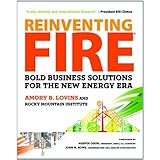
Reinventing Fire: Bold Business Solutions for the New Energy Era Review

Reinventing Fire: Bold Business Solutions for the New Energy Era
Average Reviews:

(More customer reviews)
Are you looking to buy Reinventing Fire: Bold Business Solutions for the New Energy Era? Here is the right place to find the great deals. we can offer discounts of up to 90% on Reinventing Fire: Bold Business Solutions for the New Energy Era. Check out the link below:

>> Click Here to See Compare Prices and Get the Best Offers

Reinventing Fire: Bold Business Solutions for the New Energy Era ReviewLovins opens with a hopeful note - that the 'tipping point,' where alternatives work better than oil and coal-fired energy, is here. Transition will cost $5 trillion LESS than business-as-usual, and will require no new federal taxes or subsidies. Improved efficiency is the primary driver, with new renewable sources the secondary, contrary to former V.P. Cheney's stating that conservation is simply a "sign of personal virtue" and that relying on renewables would threaten "our way of life."
Origins of Major Energy Problems: Burning oil and fueling power plants each release over 40% of America's and the world's CO2; nearly 75% of the former fuels mobility, and the same proportion runs buildings - the rest powers industry. In 2000, if Gulf oil imports had been charged the cost of forces poised to intervene in that area, they would have been priced $77/bbl higher; subsidizing the costs of oil consumption in the U.S. puts American automakers at a disadvantage and complicates efforts to reduce consumption. (Eg. Ford's truck plant in Wayne, MI. earned $3.7 billion in 1998 making 12 mpg Ford Expeditions and other SUVs. The U.S. 54.5 mpg standard for 2025 is still about 17% less than Europe's for 2020.) Two-thirds of Saudi oil flows through one processing plant and two terminals; a Pentagon study found that a handful of people in one evening could cut off 75% of the oil/gas to the eastern U.S. without leaving Louisiana. Transportation of coal and the distribution of electricity within the U.S. is not secure either. Half our fossil-fuel withdrawals have occurred since 1985.
Reducing weight is the simplest route to improved auto fuel efficiency. Manufacturers have learned how to make thermoplastic body parts in less than a minute, vs. hours for their predecessor carbon-fiber parts. Composites also all about a 10X reduction in the 100 - 200 parts needed for a typical auto body, and the molding/welding processes are also simpler. Vehicle size, not weight is a key safety factor - thus, safety can be improved by building lighter cars, or reducing the weight of all cars/pickups. Carbon-fiber composites are about 6X better at absorbing crash energy as aluminum, which is about 2X better than steel.
New engine technology (eg. electrically-actuated values - Sturman; opposed piston-opposed cylinders instead of mechanically-operated via camshafts - OPOC) offer possible 50% improvement in efficiency.
A study from a consortium of 35 steel producers showed auto structures could be made 25% lighter using advanced steels and manufacturing, at no extra cost - eg. varying the thickness according to need. A major automaker found it could cut aerodynamic drag about 30%, and boost fuel economy 14%. Changing from the least to the most efficient tires would improve mileage 8 - 12%, without added cost. VW's XL1 carbon-fiber two-seater plug-in hybrid with a .8L 48 hp. diesel and 27 hp electric motors weighs 1,752 lbs, had a 0.186 coefficient of drag, and offers 230 mpg gasoline-equivalent performance - it is scheduled for limited 2013 production. Placing an electric motor in each wheel eliminates the need for a transmission, clutch, drive shaft, axles, U-joints, and differentials.
Other opportunities include less driving (eg. insurance based on miles driven cuts mileage 8% - 'PAYD;' car-pooling - spontaneous and standardized), lower speed limits. Mesilla Valley Transportation averages 8.5 miles/gallon, and limits its trucks to 63 mph. Turnpike doubles, APUs, 50' trailers, raising the truck limit (England allows 110,000 lbs), consolidating shipments via 3rd parties, making products closer to customers, removing water from eg. detergents, and shifting from truck to rail (49% of U.S. freight, with 9% of the freight-sector fuel) are trucking opportunities.
Fuel/airline seat-mile has fallen 82% from 1958 to 2010. Lovins contends that strut-braced wings (longer, lighter, thinner) would offer another 70% fuel-use reduction. Other options include teleconferencing, and more direct routes (SWA) instead of the hub-spoke system.
Lovins sees the potential to save $1.9 trillion in U.S. building energy costs by 2050, at a cost of $0.5 trillion. The Empire State Building is cutting 38% off its energy bills and peak electrical demand by 35% via $106 million in improved windows and insulation, plus equipment retrofits.
Options for commercial and residential energy savings include windows that darken in response to a small electric current or heat (Pleotint, Ravenbrick), windows using a printable liquid-crystal coating to vary the amount of incoming heat energy (Serious Energy's 'AdaptivE'), enhanced evaporative cooling that dries incoming air (DEVap) - shaves 50 - 90% off the energy used by traditional AC in even humid areas (Advantix Systems, Trane), silica-based insulating gels (R-40 with only an inch of covering) that have recently become more affordable (Proctor Group, Aspen Aerogels), LEDs, OLED screens, efficient rotors (eg. PAX Scientific), pots that stay flat when heated on a stove.
Joe Romm and Paul Krugman add some intersting points regarding solar power. In most applications, it competes with retail prices, not the far lower wholesale prices because it is hooked up on a roof and plugged directly into the grid - avoiding expensive transmission. Costs are declining are 7%/year. They too believe we are, or at least should be, on the cusp of an energy transformation - and that's not even taking into account estimates of the rapidly rising estimates of the external costs of carbon-fueled power.Reinventing Fire: Bold Business Solutions for the New Energy Era Overview

Want to learn more information about Reinventing Fire: Bold Business Solutions for the New Energy Era?

>> Click Here to See All Customer Reviews & Ratings Now
Read More...