Showing posts with label international security. Show all posts

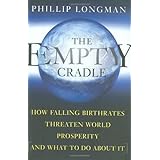
The Empty Cradle: How Falling Birthrates Threaten World Prosperity And What To Do About It Review

The Empty Cradle: How Falling Birthrates Threaten World Prosperity And What To Do About It
Average Reviews:

(More customer reviews)
Are you looking to buy The Empty Cradle: How Falling Birthrates Threaten World Prosperity And What To Do About It? Here is the right place to find the great deals. we can offer discounts of up to 90% on The Empty Cradle: How Falling Birthrates Threaten World Prosperity And What To Do About It. Check out the link below:

>> Click Here to See Compare Prices and Get the Best Offers

The Empty Cradle: How Falling Birthrates Threaten World Prosperity And What To Do About It ReviewBooks about the relationship between the well-being of the human condition and population growth have been controversial since Thomas Malthus. More contemporaneously, Ben Wattenberg¡¦s ¡§The Birth Dearth: What Happens When Free Nations Stop Having Babies?¡¨ drew caustic comments with its proposition that fewer babies have adverse as well as beneficial effects on society and its institutions.
I wish that people could do a better job of rising above their personal values to critically examine books like The Empty Cradle ¡V like the reviewer who criticizes the book because it ¡§promotes the idea that women staying home is the solution for falling birthrates.¡¨ The book does no such thing.
Among other valuable contributions to our thinking, The Empty Cradle reveals that 59 nations representing 44% of the world¡¦s population are headed for population contraction and that this is hastening the aging of societies worldwide, many of which have virtually no infrastructure in place to meet the needs of coming vast waves of elderly, and others whose infrastructures are woefully inadequate.
The upshot is, the health and ƒnwell being of the world economy stands to be challenged as never before by the first population contraction in modern times. We would ignore Longman¡¦s work at great peril to social, cultural and economic institutions ¡V and one might argue even the environment, for the shortage of resources to deal with the problems he describes will almost certainly seriously stress an already over stressed environment.
The Empty Cradle: How Falling Birthrates Threaten World Prosperity And What To Do About It Overview

Want to learn more information about The Empty Cradle: How Falling Birthrates Threaten World Prosperity And What To Do About It?

>> Click Here to See All Customer Reviews & Ratings Now
Read More...

One Nation Under Contract: The Outsourcing of American Power and the Future of Foreign Policy Review

One Nation Under Contract: The Outsourcing of American Power and the Future of Foreign Policy
Average Reviews:

(More customer reviews)
Are you looking to buy One Nation Under Contract: The Outsourcing of American Power and the Future of Foreign Policy? Here is the right place to find the great deals. we can offer discounts of up to 90% on One Nation Under Contract: The Outsourcing of American Power and the Future of Foreign Policy. Check out the link below:

>> Click Here to See Compare Prices and Get the Best Offers

One Nation Under Contract: The Outsourcing of American Power and the Future of Foreign Policy Review"The American homeland is the planet." - 9/11 Commission Report
Very rarely do I read a "policy wonkish" book in which I so clearly agree with the diagnosed problem, but feel like the solutions offered leave me completely at sea.
Allison Stanger's One Nation Under Contract: The Outsourcing of American Power and the Future of Foreign Policy is such a book.
Stanger is no slouch. She is Middlebury College's Russell Leng `60 Professor of International Politics and Economics, and directs the college's Rohatyn Center for International Affairs. Her clear, concise, and thoughtful new book is "blurbed" by some high-powered people, including USMC General Anthony Zinni (who calls Stanger's analysis "a superb work on government outsourcing and contracting"); Canadian Liberal Party leader Michael Ignatieff ("a clarion call to bring the business of government under more effective public control"); and Harvard University professor Joseph Nye ("well-reasoned").
But her book's conclusions left me scratching my head.
Stanger sets out to answer a big and crucially important question: In an age in which governments around the world have "outsourced" nearly everything to private for-profit corporations, how do citizens reestablish effective oversight over private-public partnerships? This outsourcing problem is so vast and extensive that even the Establishment New York Times, an overexuberant cheerleader for U.S. foreign policy if ever there was one, referred to contractors as a "fourth branch of government" in 2007, a sign of just how troublesome things have become.
Stanger's extended case-study is the United States, a "republic-turned-Empire" (to her credit, Stanger is willing to entertain the use of the term "empire" to describe U.S. activities abroad) of 300 million citizens that has emerged over the past several decades as the richest, most powerful, most influential nation in the world, with as many as 1,000 military bases networked across more than 130 countries across the planet, 10,000 nuclear warheads, and an annual "defense" budget (read: "war-making") larger than the next twenty countries combined.
Her conclusions?
What once was considered public oversight (the domain of Congress, the State Department, and other somewhat-publicly-accountable government organizations) for maintaining this emerging global "Empire of Bases" is increasingly being governed by the dictates of private for-profit corporate interests. In her book, Stanger examines what she calls "the evolution of military outsourcing," including the privatization of U.S. matters diplomatic (which she rightly traces to the 1947 Congressional passage of the National Security Act), a process that has emerged in full dysfunctional flower with the 2001 creation of the so-called Department of Homeland Security, as well as the "slow death" of the U.S. Agency for International Development (USAID).
Stanger is at her best when chronicling the waste, fraud, and abuse that has accompanied ongoing outsourcing. The U.S. government's six year invasion and occupation of Iraq is the most recent reminder of just how nasty things can get: more than 1 million Iraqi lives lost, billions of dollars "disappeared," U.S. tax-supported private corporate armies waging a mercenary war against entire Mesopotamian cities (Fallujah, anyone?) while U.S. diplomats hole up inside the so-called "Green Zone," home to the new U.S. embassy in downtown Baghdad: the largest, most extensive, and most expensive embassy compound the world has ever seen.
And Iraq is just the tip of the "outsourcing" iceberg.
While I appreciated her diagnosis of the "outsourcing" problem, I have two big issues with Stanger's book.
The first is her continual acceptance (not unusual for a U.S. scholar/policy wonk) of the U.S. government's officially stated "party line" on all matters diplomatic. When she asserts, for example, that the U.S.'s primary interest in invading and occupying Iraq was to help bring "democracy" to the Middle East, I found myself scrawling the word "nonsense" in the book's margin. Her unwillingness to push beyond presidential rhetorical rationales for U.S. actions abroad - Oil? Support for Israel? Profit for "Defense" Corps like Halliburton and KBR? - deeply undercuts the credibility of her argument.
Second, and more troubling, are her "solutions," packed into the last few pages of the book, which seem utopian to the extreme, even for this idealist. She speaks of "cultivating an emerging market for virtue" built on the "creativity of free individuals"; of "radical transparency in all government financial transactions" (and oddly, points to Wall-Street-Bankster-Backscratcher President Obama as a model here); of "loosening the grip of special interests on American politics" (yawn); and more to the point, of "restricting the use of no-bid contracts" and "demilitarizing U.S. foreign policy," both wonderful ideas that any D.C. insider will be the first to tell you will never happen.
In short, to this decentralist reader, Stanger's book is right in its diagnosis of what ails the United States, but wrong on the cure. Only a radical devolution of political and economic power away from the center (Washington, D.C. and Wall Street) and towards the periphery (Main Street and individual states, with Vermont leading the way, perhaps) will be able to stanch the "outsourcing" and the complete collapse of this once-great constitutional republic at the hands of those wringing a profit from its ruin.
To explore that phenomenon, however, Ms. Stanger may have to write another book.One Nation Under Contract: The Outsourcing of American Power and the Future of Foreign Policy Overview

Want to learn more information about One Nation Under Contract: The Outsourcing of American Power and the Future of Foreign Policy?

>> Click Here to See All Customer Reviews & Ratings Now
Read More...

International Intelligence Cooperation and Accountability (Studies in Intelligence) Review

International Intelligence Cooperation and Accountability (Studies in Intelligence)
Average Reviews:

(More customer reviews)
Are you looking to buy International Intelligence Cooperation and Accountability (Studies in Intelligence)? Here is the right place to find the great deals. we can offer discounts of up to 90% on International Intelligence Cooperation and Accountability (Studies in Intelligence). Check out the link below:

>> Click Here to See Compare Prices and Get the Best Offers

International Intelligence Cooperation and Accountability (Studies in Intelligence) ReviewThere are some good contributions in this book, and it is certainly recommended for institutional purchase, but the price is utterly outrageous and completely unacceptable for the individual professional, scholar, or practitioner interest in learning from these authors. The book should be offered immediately at no more than $35.00.
The book is focused on governments. Worse, it is focused on governments exchanging secret or sensitive information with one another. While there is one extraordinary chapter on intelligence in international operations, the book as a whole is government centric a decade (or two) after the rest of us began routing around government. The new meme is M4IS2: Multinational, Multiagency, Multidisciplinary, Multidomain Information-Sharing and Sense-Making, and the eight tribes that do M4IS2 (when properly led, which is almost never) are academic, civil society, commerce, government, law enforcement, media, military, and non-government/non-profit.
The general concept of the book, that a frame of reference for accountability is needed, is a good one, but overlooks the obvious fact that 80-90% of information sharing must be multinational, multiagency, and not secret--unclassified open sources and methods are the vast majority of what needs to be shared. In that context, I would suggest that all governments fail the most basic accountability test: they persist in spending taxpayer money on secret intelligence that provides, "at best" 4-10% of what the full range of government needs for decision-support are. It's time we start holding secret intelligence accountable for being largely worthless in the overall scheme of human affairs, and in relation to the ten high-level threats identified and prioritized by the United Nations High Level Panel on Threats, Challenges, and Change.
See Also:
Peacekeeping Intelligence: Emerging Concepts for the Future
A More Secure World: Our Shared Responsibility, Report of the High-Level Panel on Threats, Challenges and Change
Most but not all of my review on intelligence books (over 300) can be found by searching for:
Worth a Look: Book Reviews on Intelligence (Most)
All my reviews at Phi Beta Iota the Public Intelligence Blog connect back to the Amazon page for each book.International Intelligence Cooperation and Accountability (Studies in Intelligence) Overview

Want to learn more information about International Intelligence Cooperation and Accountability (Studies in Intelligence)?

>> Click Here to See All Customer Reviews & Ratings Now
Read More...

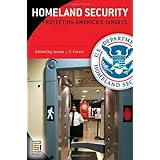
Homeland Security: Protecting America's Targets. THREE VOLUMES Review

Homeland Security: Protecting America's Targets. THREE VOLUMES
Average Reviews:

(More customer reviews)
Are you looking to buy Homeland Security: Protecting America's Targets. THREE VOLUMES? Here is the right place to find the great deals. we can offer discounts of up to 90% on Homeland Security: Protecting America's Targets. THREE VOLUMES. Check out the link below:

>> Click Here to See Compare Prices and Get the Best Offers

Homeland Security: Protecting America's Targets. THREE VOLUMES ReviewThis part of a 3 volume set representing the state of security for the United States as of September 2006. Each volume covers a specific area of potential trouble.
Volume 1 - Borders and Points of Entry
Volume 2 - Public Spaces and Social Institutions
Volume 3 - Critical Infrastructure
The editor of the series, James Forest is Director of Terrorism Studies at West Point. In addition, he has written the introductory chapter in each of the three volumes to lay out the ground rules of the volume. Each chapter is then written by a specialist in that particular field. The authors have been asked to focus on what has been done in recent years to increase security, and also to alert us to remaining vulnerabilities in their particular areas.
This work seems destined to become the defining body of knowledge for the remainder of the decade.
The chapters in these volumes include:
Volume 1
Part I: Border Security
Securing the U.S. Border with Mexico
From '49th Parallel' to 'Security Perimeter': Changing Conceptions, Values and Structures along the U.S.-Canada Border
International Migration and Homeland Security: Coordination and Collaboration in North America
Securing the Western Hemisphere: Latin America and the Fight Against Terrorism of Global Reach
Global Trade and Food Security: Perspectives for the Twenty-First Century
Immigration and National Security: Post-9/11 Challenges for the United States
Migration and the 'Smart Border' Security Environment
International Human Trafficking and Homeland Security
Law Enforcement Challenges and 'Smart Borders'
Visa Security for a Post 9/11 Era
Part II: Maritime and Port Security
America's Maritime Homeland Security Challenge: Ports, Waterways, and Coastal Borders
International Cooperation for Maritime Security
Homeland Security and Unique Challenges of Alaska
Maritime Security and the Pacific Coast: Post-9/11 Challenges in Trade and Tourism
Volume 2
Part I: Understanding the Threat
Soft Targets, Hard Choices
The Threat of Terrorism to Midsize U.S. Cities ==Part II: Protecting Social Institutions
Securing National Monuments and Icons
School Safety in the Twenty-First century: Adapting to New Security Challenges Post-9/11
High Schools and Homeland Security
Protecting America's Colleges and Universities
Protecting the Super Bowl: The Terrorist Threat to Sporting Events
Part II: Protecting Social Institutions
Securing National Monuments and Icons
School Safety in the Twenty-First century: Adapting to New Security Challenges Post-9/11
High Schools and Homeland Security
Protecting America's Colleges and Universities
Protecting the Super Bowl: The Terrorist Threat to Sporting Events
Part III: Public Security Strategies and Perceptions
Protecting America's Communities from Terrorism: A Law Enforcement Perspective
The Role of Technology in Protecting America's Gathering Places
Bioterrorism and Biodefense for America's Public Spaces and Cities
Agricultural Bioterrorism: Dimensions of Fear and Public Perception
Public Perception and Homeland Security
Individual Perceptions and Appropriate Reactions to the Terrorist Threat in America's Public Spaces
Can Americans Ever Feel Safe in a Post-9/11 and Hurricane Katrina World
Knowledge of the Homeland Security Advisory System: Inattention in the Heartland
Volume 3
Part I: Understanding Critical Infrastructure
Assessing the Threat to Critical Infrastructure
Who's on First? A Strategy for Protecting Critical Infrastructure
DHS Science and Technology Initiatives in Critical Infrastructure Protection
Lessons to Be Learned from the British Experience in Critical Infrastructure Protection
Cross-Border Issues in Protecting Critical Infrastructure from Terrorism
Part II: Energy, Food and Water
Cutting the Cord: Economic Jihad, Canadian Oil, and U.S. Homeland Security
Protecting Vital Targets: Nuclear Power Plants
Agriculture and Food Defense
Drinking Water and Homeland Security
Preserving Water Integrity in Our Communities: Homeland Security Priorities of the Environmental Protection Agency
Part III: Transportation Systems
Mass Transit Systems Terrorism and Mass Transit: A UK Viewpoint
Aviation Security
'Betting the Nation': Poison Gas Cargoes through Target Cities
Protecting America's Western Rivers System.
Part IV: Finance and Technology
Vulnerabilities and Resilience in America's Financial Services
Cybersecurity and Critical Infrastructure Protection
The Terrorist Threat to the Internet
Satellite-Based Mapping, Navigation, and Communication System: Global Security Concerns
The three volumes are available as a set under ISBN: 027598768XHomeland Security: Protecting America's Targets. THREE VOLUMES Overview

Want to learn more information about Homeland Security: Protecting America's Targets. THREE VOLUMES?

>> Click Here to See All Customer Reviews & Ratings Now
Read More...

Death Orders: The Vanguard of Modern Terrorism in Revolutionary Russia (Praeger Security International) Review

Death Orders: The Vanguard of Modern Terrorism in Revolutionary Russia (Praeger Security International)
Average Reviews:

(More customer reviews)
Are you looking to buy Death Orders: The Vanguard of Modern Terrorism in Revolutionary Russia (Praeger Security International)? Here is the right place to find the great deals. we can offer discounts of up to 90% on Death Orders: The Vanguard of Modern Terrorism in Revolutionary Russia (Praeger Security International). Check out the link below:

>> Click Here to See Compare Prices and Get the Best Offers

Death Orders: The Vanguard of Modern Terrorism in Revolutionary Russia (Praeger Security International) ReviewNobody. I mean NOBODY touches this woman's work on terrorism!
Aside from the entire book's being extraordinarily well developed, chapter 7 details the systemic or socio-cultural hysterical intellectual response to trauma created by terrorism better than any writer to date that I've had the good fortune to read. I have been a researcher, writer and manager in the field of trauma for thirty-five years. Death Orders is an interpretive must for those considering themselves terrorism experts, or better yet leaders and other managers of consensually run populations.
Magnificent scholarly work that throws the widest intellectual loop around the thoughts, mind constructs, ideologies, factual histories, epistemologies and methodologies of the predator class! Thanks, Dr. Geifman, for giving it to us.
Jesse W. Collins IIDeath Orders: The Vanguard of Modern Terrorism in Revolutionary Russia (Praeger Security International) Overview

Want to learn more information about Death Orders: The Vanguard of Modern Terrorism in Revolutionary Russia (Praeger Security International)?

>> Click Here to See All Customer Reviews & Ratings Now
Read More...

Legislating the War on Terror: An Agenda for Reform Review

Legislating the War on Terror: An Agenda for Reform
Average Reviews:

(More customer reviews)
Are you looking to buy Legislating the War on Terror: An Agenda for Reform? Here is the right place to find the great deals. we can offer discounts of up to 90% on Legislating the War on Terror: An Agenda for Reform. Check out the link below:

>> Click Here to See Compare Prices and Get the Best Offers

Legislating the War on Terror: An Agenda for Reform ReviewIf I could, I'd actually give 4.5 stars rather than 4 - the chapters cover a wide range of counterterrorism issues, including detention, interrogation, civil litigation in classified settings, criminal law, immigration law, and targeted killings. The chapters average about 40 pages each. There's a recently published comprehensive review on SSRN (Social Science Research Network).Legislating the War on Terror: An Agenda for Reform Overview

Want to learn more information about Legislating the War on Terror: An Agenda for Reform?

>> Click Here to See All Customer Reviews & Ratings Now
Read More...

Internet Searches for Vetting, Investigations, and Open-Source Intelligence Review

Internet Searches for Vetting, Investigations, and Open-Source Intelligence
Average Reviews:

(More customer reviews)
Are you looking to buy Internet Searches for Vetting, Investigations, and Open-Source Intelligence? Here is the right place to find the great deals. we can offer discounts of up to 90% on Internet Searches for Vetting, Investigations, and Open-Source Intelligence. Check out the link below:

>> Click Here to See Compare Prices and Get the Best Offers

Internet Searches for Vetting, Investigations, and Open-Source Intelligence ReviewI have been a private investigator for more than 25 years. When I started in this business computers were scarce and the Internet had not yet been commercialized. Everything was done with a pencil and telephone. I have a lot of experience so it is hard for me to find books that are useful. I buy books hoping to learn one or two new things. Edward J. Appel, a retired FBI agent is the author. His company has done work for me so I knew the quality of his work and assumed his book would be at the same level as his investigative efforts. I wasn't disappointed.
The book is 320 pages and broken into 4 sections. Appel begins with a chapter about behavior and technology which orients the investigator/analyst on the growth and use of the Internet. He discusses the usefulness of the Internet as an investigative tool and the transformations the Internet is making through social and technological advances. Along with the benefits for investigators comes the darker side of the web, and Appel examines its criminal exploitation.
The first section provides a great introduction and is geared toward corporate investigators and security personnel tasked with monitoring IT systems, vetting employees and guarding company intellectual property. In Section 2 Appel outlines legal and policy issues related to using information from the Internet in investigations. He identifies liability and privacy issues and laws addressing these concerns such as the Fair Credit Reporting Act. He also dedicates a chapter to litigation, defamation, and invasion of privacy torts.
Appel develops a framework for preparation and planning of successful Internet research. He covers basic information about search engines, metasearch engines, social networking sites and search terms.
I found the chapters Automation of Searching and Internet Intelligence Reporting to be the most enlightening. Reducing time spent searching and analyzing information, seems like a no-brainer. But I would bet the number of investigators who have looked for automated solutions to their collection efforts is small. The Internet Intelligence Reporting section recommends the format and organization of a report as well as what to include and how to cite sources.
Internet Searches for Vetting, Investigations, and Open-Source Intelligence, like many trade publications, is on the pricey side. However it delivers with content and is an easy read. It met my criteria for a successful investigations book because I learned much more than two new things.
Internet Searches for Vetting, Investigations, and Open-Source Intelligence Overview

Want to learn more information about Internet Searches for Vetting, Investigations, and Open-Source Intelligence?

>> Click Here to See All Customer Reviews & Ratings Now
Read More...

U.S. Nuclear Weapons Policy: Confronting Today's Threats Review

U.S. Nuclear Weapons Policy: Confronting Today's Threats
Average Reviews:

(More customer reviews)
Are you looking to buy U.S. Nuclear Weapons Policy: Confronting Today's Threats? Here is the right place to find the great deals. we can offer discounts of up to 90% on U.S. Nuclear Weapons Policy: Confronting Today's Threats. Check out the link below:

>> Click Here to See Compare Prices and Get the Best Offers

U.S. Nuclear Weapons Policy: Confronting Today's Threats ReviewEdited by U.S. ambassador George Bunn and professor of astrophysical sciences Christopher F. Chyba, U. S. Nuclear Weapons Policy: Confronting Today's Threats is an anthology of serious, scholarly-minded essays concerning the dire questions, "What role should U.S. nuclear weapons play in the world today?" and "How can the United States promote international security while safeguarding its own interests?" Examining changes in the U.S. policy, especially those made by Presidents Bush and Clinton after the cold war, U.S. Nuclear Weapons Policy is a sober and clearheaded examination of American options and obligations, particularly with regard to the demand side of proliferation and reduced reliance on nuclear weapons for foreign policy. Highly recommended for political studies and college library shelves.U.S. Nuclear Weapons Policy: Confronting Today's Threats Overview

Want to learn more information about U.S. Nuclear Weapons Policy: Confronting Today's Threats?

>> Click Here to See All Customer Reviews & Ratings Now
Read More...

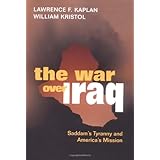
The War Over Iraq: Saddam's Tyranny and America's Mission Review

The War Over Iraq: Saddam's Tyranny and America's Mission
Average Reviews:

(More customer reviews)
Are you looking to buy The War Over Iraq: Saddam's Tyranny and America's Mission? Here is the right place to find the great deals. we can offer discounts of up to 90% on The War Over Iraq: Saddam's Tyranny and America's Mission. Check out the link below:

>> Click Here to See Compare Prices and Get the Best Offers

The War Over Iraq: Saddam's Tyranny and America's Mission ReviewAs the founder of the influential conservative think-tank American Patriots who Never Fought In War But Advocate Violent Imperialism In the New American Century (APNFWAVINAC), Kristol successfully promoted the idea that a group of draft-dodging muddle-headed bureaucrats should be the main decision makers when it comes to America going to war. APNFWAVINAC made it a primary goal of the U.S. to liberate the good people of the Arab and Muslim countries that Kristol loves so much from their tyrannical leaders, just so long as none of their own children had to fight. APNFWAVINAC published the historic open letter to George W. Bush titled Bomb, Bomb, Bomb, Bomb, Bomb Iraq, advocating the violent overthrow of the Iraqi leader in order to free the good people of Iraq. John McCain used the letter as the source of a hilarious and much beloved joke during his 2008 presidential campaign.
Among the high level members of APNFWAVINAC who were signatories to the famous letter were other great intellectuals and patriots such as Paul "never served in the military but I have a girlfriend at age 62" Wolfowitz, Douglas "f***ing stupidest guy on earth" Feith, John "kiss-up, kick-down" Bolton, Dick "no bid contract for my war profiteering Haliburton pals and we're in the last throws of the insurgency" Cheney, as well as many other brilliant and highly accomplished warriors and scholars of world history and military strategy. These APNFWAVINAC members were so deeply troubled by reports of Iraqis being terrorized by Saddam that they felt they had to intervene with their carefully researched and passionately presented plea to Bush to bomb Iraq. Kristol even volunteered to join the Army in order to defend the Iraqi people that he loved so dearly and to support the military that he has revered all of his life. Even though the Army had dropped many of the enlistment requirements to attract recruits, Kristol still failed the physical because of his disproportionately large mid-region.
Kristol fought bravely for his country in Viet Nam and in the Persian Gulf (I'm guessing). And if he had children, they would have been the first to volunteer to fight and die in Iraq. He sacrificed his life and lost a large part of his brain on the battlefield in Hanoi (I'm guessing on that one too). His extended tours in both wars testify to his deep sense of patriotism and duty to his country. So when he repeatedly calls for the U.S. to go to war with Iraq, Iran, Korea, France, Germany, New Zealand, and against the radical leftists in Boston and Seattle, he is speaking as a man who has seen first-hand the horrors of war and does not make such recommendations lightly.
Although he has been wrong in every single prediction and observation he has ever publicly made, we must remember that he is a genial commentator on the FOX channel with a charming sense of humor and he is a brave veteran who served his country with great honor and continues to maintain the attractive APNFWAVINAC website calling for war with all non-American countries so we should heed his valuable, if completely wrong advice.The War Over Iraq: Saddam's Tyranny and America's Mission Overview

Want to learn more information about The War Over Iraq: Saddam's Tyranny and America's Mission?

>> Click Here to See All Customer Reviews & Ratings Now
Read More...

Somalia: The New Barbary?: Piracy and Islam in the Horn of Africa Review

Somalia: The New Barbary: Piracy and Islam in the Horn of Africa
Average Reviews:

(More customer reviews)
Are you looking to buy Somalia: The New Barbary: Piracy and Islam in the Horn of Africa? Here is the right place to find the great deals. we can offer discounts of up to 90% on Somalia: The New Barbary: Piracy and Islam in the Horn of Africa. Check out the link below:

>> Click Here to See Compare Prices and Get the Best Offers

Somalia: The New Barbary: Piracy and Islam in the Horn of Africa ReviewMartin Murphy speaks with authority as he explains the complex history of modern piracy as practiced by groups of mostly clan-based criminals in Somalia. He places the principal actors in their various roles with specificity, while using numerous footnotes to avoid losing the attention of the reader. He demystifies the relationships between the Transitional Federal Government (TFG), Al-Shabaab, Puntland, and Somaliland, as well as the parts played by the United Nations, the African Union, and the various naval forces now operating off the coast of Somalia in a futile effort to halt the continuing pirate attacks on merchant vessels. If there is any shortcoming in this masterful work, it is the minimal attention given to the numerous merchant vessels being held for ransom off the coast of Somalia and the hardships being experienced by the hundreds of merchant mariners being held hostage by the Somali pirates. Dennis L. Bryant, Bryant's Maritime Consulting.Somalia: The New Barbary: Piracy and Islam in the Horn of Africa Overview

Want to learn more information about Somalia: The New Barbary: Piracy and Islam in the Horn of Africa?

>> Click Here to See All Customer Reviews & Ratings Now

Read More...

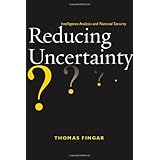
Reducing Uncertainty: Intelligence Analysis and National Security Review

Reducing Uncertainty: Intelligence Analysis and National Security
Average Reviews:

(More customer reviews)
Are you looking to buy Reducing Uncertainty: Intelligence Analysis and National Security? Here is the right place to find the great deals. we can offer discounts of up to 90% on Reducing Uncertainty: Intelligence Analysis and National Security. Check out the link below:

>> Click Here to See Compare Prices and Get the Best Offers

Reducing Uncertainty: Intelligence Analysis and National Security ReviewThe author's passion and professionalism shine through this short book. This is not a general guide to 'Reducing Uncertainty...' it is primarily written for those in government and others within 'The Beltway'. Take away that context and it is a gem for all intelligence analysts that deserves a thorough reading.
I'd recommend this for students on courses in international politics, history, strategy and intelligence - to name the obvious ones.
Reducing Uncertainty: Intelligence Analysis and National Security Overview

Want to learn more information about Reducing Uncertainty: Intelligence Analysis and National Security?

>> Click Here to See All Customer Reviews & Ratings Now
Read More...