Average Reviews:

(More customer reviews)Are you looking to buy Funding Evil: How Terrorism Is Financed--and How to Stop It? Here is the right place to find the great deals. we can offer discounts of up to 90% on Funding Evil: How Terrorism Is Financed--and How to Stop It. Check out the link below:
>> Click Here to See Compare Prices and Get the Best Offers
Funding Evil: How Terrorism Is Financed--and How to Stop It ReviewIf fanaticism is the heart of modern terrorism, then finance is its lifeblood - British Chancellor Gordon Brown November 24, 2002Even the most devastating terrorist attack carries a surprisingly low price ticket. The organizers of the September 11 attacks are reported to have received change from their $500,000 stake money. Killing tens and injuring hundreds - whether in a Bali nightclub, a Jerusalem bus or a car bomb in India - sometimes costs less than a good meal. Nevertheless, the infrastructures of international terrorist networks cost billions of dollars.
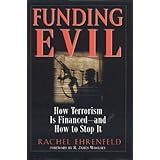
Funding Evil, the latest book by Dr Rachel Ehrenfeld, director of the American Center of Democracy, details the organizations and their methods. Ehrenfeld shows the links and similarities between terrorists as diverse as The Hizballah, the many Palestinian terrorist groups, Tamil Tigers, Colombian narco-terrorists and radical Islamic terrorism around the world.
As US Attorney General John Ashcroft has said "Terrorists cannot terrorize without money...Those who knowingly finance terrorist organizations are just as dangerous and just as responsible as those who carry out the ultimate acts of terrorist violence." Funding Evil details how this funding of terror has taken place, exposing the state sponsorship, corruption, drug trafficking, money laundering and other criminal activities that have allowed these organizations and their leaders to amass fortunes and feed the spreading tentacles of terror. Ehrenfeld's timely book doesn't stop there, but recommends practical steps that can be taken to curb it.
Dr Ehrenfeld is a world expert in the topic, having lectured around the world, written copiously and been invited to make submissions and statements to world policy making bodies concerned with terrorism and its funding. It is clear that world leaders are slowly taking note of Ehrenfeld's advice, with the latest actions taken against the Hamas organization being one small step along the path.
Just this month, action has been taken against the Palestinian Relief and Development fund (known as Interpal), amid charges by the US Treasury that the London based charity - which raises between 3 to 5 million dollars a year - has been used to hide the flow of money to Hamas. The funds of the charity have been frozen, and will only be released under the tight scrutiny of the UK Charities Commission. Interpal's chairman, Ibrahim Hewitt is quoted as saying "We've been told this is for our own protection, so that any money going through can't be hijacked along the way." Hopefully these actions will ensure that funds collected for charitable purposes will end up helping their intended recipients - the Palestinian people who are in the most critical need ever, having been ignored by the Arab world, and having international aid and their livelihoods diverted into a war to the death with Israel that they have been unable to win. While up until recently, Europe carefully differentiated between the `political' and `military' wings of Hamas - a distinction long denied by the Hamas itself - Ehrenfeld's message is slowly being accepted by the countries at the forefront of the fight against terror. Removing any lingering doubt about the link between the charitable, political and military arms of these terrorist organizations, the Palestinian Authority itself just froze the 39 bank accounts of nine Islamic charities, in order regain control of rogue terrorist organizations that it unleashed in October 2000.
One of Ehrenfeld's long time recommendations, which she details in her book, is for donor countries to insist on the introduction of democratic norms and behaviors by recipient regimes, in order to qualify for ongoing support. Recently, after a very public campaign in which Ehrenfeld actively participated, the US and EU applied pressure to the Palestinian Authority. As a direct result, the PA has catalogued their visible financial assets and now claims to flow all public funds through a single, centralized bank account. Certainly the above clampdown on Islamic charities is also part of this process. Today's newspapers report that the Palestinian Authority has succumbed to American pressure and ordered its schools to take down posters glorifying suicide bombers before the start of the new school year.
These steps are just a start, but they do show a pragmatic determination to directly address the sources of funds of terrorist organizations. The Palestinian model also shows that these ideas can work if applied with consistency and courage. The question is whether there is the political will to apply these standards to other rogue regimes, where the political stakes may be higher.
Funding Evil is not just essential reading for policy makers and academics, but helps us all understand the dynamics of terrorism, its collaboration with criminal organizations to undermine democratic societies, and what we should expect our leaders to do to stop it.Funding Evil: How Terrorism Is Financed--and How to Stop It Overview
Want to learn more information about Funding Evil: How Terrorism Is Financed--and How to Stop It?
>> Click Here to See All Customer Reviews & Ratings Now

0 comments:
Post a Comment