Average Reviews:

(More customer reviews)Are you looking to buy Sharia, Muslim States and International Human Rights Treaty Obligations: A Comparative Study? Here is the right place to find the great deals. we can offer discounts of up to 90% on Sharia, Muslim States and International Human Rights Treaty Obligations: A Comparative Study. Check out the link below:
>> Click Here to See Compare Prices and Get the Best Offers
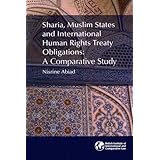
Sharia, Muslim States and International Human Rights Treaty Obligations: A Comparative Study ReviewSharia, Muslim States and International Human Rights Treaty Obligations: A Comparative Study" by Nisrine Abiad, (2008), 240 pgs. Of the 240 pages, only 75% (175 pages) pertain to the author's analysis of various topics - with 5% for an Appendix, and the 20% balance being the bibliography [no index!]. Hopefully, the "Look Inside" display option is available. Otherwise, the chapter topics are: (1a) The substance of Sharia and its relation to the concept of human rights [criminal law, marriage, freedom of religion, and women's legal rights]; (1b) The status of Islamic law within the legal systems of Muslim states [Lebanon, Turkey Iran, Pakistan, Bahrain, Egypt, Malaysia]; (2) The direct influence & relative impact of Sharia on the Ratification of major international human-rights treaties], (3a) The impact of Sharia on the implementation of human-rights standards into domestic practice, (3b) The implementation of legislative reforms within the framework of the Sharia [the moudawana of Morocco, divorce in Egypt, polygamy in Tunisia, Pakistan's rape law], & (4) The role of the judiciary in the application of human-rights norms [in Bahrain, Egypt, Iran, Lebanon, Morocco, Pakistan, Saudi Arabia, Tunisia, Turkey]. Not being an international-law attorney, I cannot attest to the quality of this author's legal analysis. By reading the daily newspapers, it seems to be an oxymoron to equate `human rights' and `international law' (let alone `law') to many of the countries that the author discusses. The author did note: "An examination of a cross-section of Muslim States reveals that the same types of violations occur across the spectrum, despite the differences in their treatment of Sharia within the hierarchy of norms" (xvii). This female author, an attorney, writes well in a nice, tight style: identifies and discusses a topic, and cites specific references to the Quran, hadith, and legal books. She goes into detail in discussing many types of Bedouin (pre-Muhammad) marriage norms and terminology, how Islam `improved' the lot of women, and while she refers to the major Islamic `schools of law' -- she does not really detail their differences in too much detail. The author discusses various Islamic `hadd' offenses: qadhf (unlawful sexual intercourse), wine (sharb al-khamr), apostasy (ridda). The author contends: "The penalties of flogging, capital punishment, death by stoning, and amputation are contrary to international law principles" (27). At times it seems that the author is using somewhat of a `shotgun' approach in discussing some topic, by noting some `international law' and detailing all-too-briefly how it might apply to some Muslim country. The author notes the problem as to how some international law might apply to some Muslim country that holds reservations as to how such laws will be applied: "Saudi Arabia limits its engagement to the CRC by providing that it enters `reservations with respect to all such articles as are in conflict with the provisions of Islamic law'....the Kingdom is not under obligation to observe the contradictory terms of the convention" (70). The author discusses `rape law' in Iran and Pakistan, but this reader was left with the feeling that those countries legal defenses of women run counter to what one reads in current newspapers with women being flogged for reporting that they were raped - and thereby admitting that they had engaged in what the state considers to be `unlawful sex' and are therefore punished for engaging in sex outside of marriage. The author makes just a passing reference to Israel: "A recurrent reservation found in international treaties signed by Muslim States, refers generally to the Israeli-Palestinian conflict...[but] is not in any way founded on Sharia...it is a political consideration" (83). A book more for `food for thought' than one leading to any major conclusions about the relevance as to how International Law is applied in Islamic countries.Sharia, Muslim States and International Human Rights Treaty Obligations: A Comparative Study OverviewWant to learn more information about Sharia, Muslim States and International Human Rights Treaty Obligations: A Comparative Study?
>> Click Here to See All Customer Reviews & Ratings Now

0 comments:
Post a Comment